Uncategorized

The Cost of asking for help

A very long time ago, once upon a time, in the depths of the fog of the great long past, I was a young mother. I had two little children who were growing up and learning and causing the usual havoc that toddlers do.

We lived in the beautiful bubble of home that so many young families enjoy. We saw grandparents every few weeks. We went out of the home to see other parents, to go to the park or for playdates with the children. We created a cosy, safe place at home that was ours alone, as so many families do.

And then Little came along…
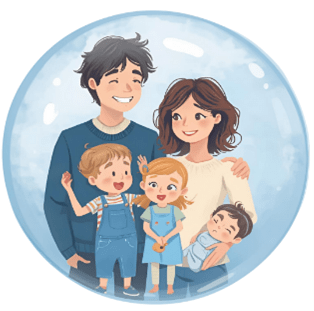
While I was expecting number three, we realised that Eldest was struggling, both at home and school. He was different from his peers in ways difficult to pinpoint: his behaviour was tricky, he wasn’t sleeping very well, he was “too clever” and didn’t understand the difference between children and grown-ups. So began meetings with teachers and doctors and intrusions into that bubble that was home.

And then Little came along…

Eleven weeks later, Little was rushed to hospital and diagnosed with failure to thrive (bad mother!), a heart defect and leukaemia (“can’t you see he’s dreadfully ill?” – bad mother!).

My older two were thrown into strangers’ homes to allow me to go to hospital visits. The strangers were  known and safe villagers, but nevertheless strangers to me and the children. Asking for help was not a choice, but a necessity and I had to accept it from wherever it came. “Act now, ask questions later” became a necessary survival technique.

Time wore on and we got into the rhythm of hospital visits. We moved country, we moved house, we moved hospitals, and doctors and nurses. All with Eldest, Girl and Little under the age of 4.

We are human and we couldn’t keep going without help.

So I took a deep breath. I knew that help would mean allowing people into our home bubble. I knew that people would look at the dishes in the sink and likely “tut”. I knew they would look at the mess on the table, the floor and their eyebrows would rise to the ceiling. They would see the pile of sheets covered in vomit and wrinkle their noses. But I knew I could not keep going alone much longer.

So I called the health visitor. And the church. And from there we say nurses, and social workers, and carers, and therapists. And because the world is what it is, most of those lovely people moved on to other things after a while, so I would meet a new nurse, social worker, carer, therapist, teacher, teaching assistant, support worker… oh another nurse from another department!

I now work as an advocate supporting families like mine. In this video I explore the cost of asking for help from that perspective…

I made the decision to ask for help 22 years ago, almost to the day. Since then, my home bubble has been open to the world and I have been open to a parade of well-meaning strangers’ judgements.

I am grateful beyond measure for all their help and I hold them very dear in my heart. But the cost to my family of that help? It was our bubble, our “safe” space, our little world to which we could retreat. And that should never be underestimated.


Uncategorized

How do you Holiday?

It’s late summer as I write this and I know that many families like mine, like yours are reaching the end of their energy reserves. Our children with additional needs more than most require a “village” to raise them. And the support systems of school, clubs, respite seem to become very scarce indeed during the holidays and this is especially true of the long summer break.

Does your child sleep? Can they ever be left unsupervised? If the answer to these questions is “no”, chances are that you have now had weeks of unending alertness and your body and brain have had enough. Not to mention juggling work, finances, extended family who may just add to the chaos. So… what’s to be done?

The first thing I would suggest is to throw out the “should” book. The stories we tell ourselves of what family life “should” look like. In this book, the holidays are so often portrayed as a blissful time with siblings playing happily together, parents watching on with tender smiles. We need to pay attention to what our children and we need – whatever that may look like.

In my case, going away on “holiday” was never an option. The stress of transition, the difficulty in managing medical supplies and the uncertainty of what that holiday might look like meant that going away was absolutely not worth it.

Our three children had very different needs, so we tried to meet them as and when we could. Mostly we stayed home and tried to keep normal daily routine going – that was the easiest way to thrive. Our daughter even had school uniform dresses because she found the change too difficult (I did buy different colours of school dresses for my sake!!). She would often plan lessons and “school” activities as a way of coping with the fact that her routine had been disturbed.

For our youngest son, the holidays usually meant badly needed rest, so he was often in bed much of the time. Anything more ended in tears of exhaustion.

And our eldest thrived in holiday times. He found the routine of school dull, unchallenging and restrictive, so the freedom of the holidays was a relief – IF he was given complete control! And he often found the first couple of weeks very difficult as he managed the change from one environment to the next.

Seemingly small things allowed us to create really happy memories – one summer, we splurged on three boxes of Lego that gave us a wonderful family afternoon. Not much maybe, but it’s a memory all of us carry to this day.

Finding somewhere that feels safe and comfortable for days out, or even half days can be remarkably replenishing. Each year, I would try and save for a year’s pass to Chessington World of Adventures, or Wisley Gardens (those happened to be close and work for us). In fact, we mostly used those for after school picnics, never venturing on the rides, but enjoying a space that felt safe.

Maybe one of the biggest and most challenging “shoulds” that I gave up was the notion that we should stay together as a family unit during holidays. While we did this during the summer, Christmas was the one that felt hardest. But for a number of years, we split the family because it was better for everyone. One child went to their grandparents (sometimes with one parent) and the other two stayed home. This gave everyone a break, and allowed the children to have their very individual needs met. Otherwise, how do you manage one child who cannot leave home, with another who desperately needs to get out?

We need to build a new set of stories I think, to share with each other how holidays can be so that we and future families allow themselves to trust their instincts and holiday in the way that suits them. To that end, I’d love to know how you holiday! Please share some ideas in the comments 🙂